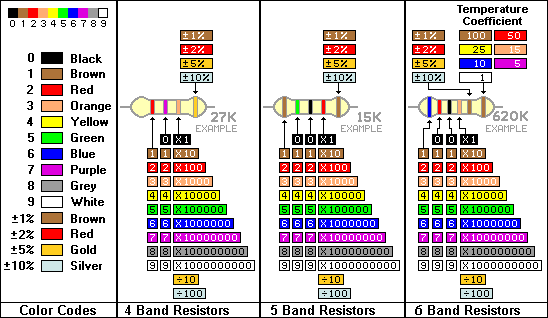

For the resistor in the circuit that has a first digit brown band (1), second and third digit black band (00), a fourth red band (00), and the fifth band is brown (±1% tolerance). This circuit has 10000 ohms resistance and ±1 % tolerance.
For the resistor that has a first digit brown band (1), second and third digit black band (0), and fourth brown band (±1 % tolerance). This circuit has 10 ohms resistance and ±1% tolerance.
The resistor in the circuit that has five bands brown (1), red (2), brown (or black, unclear because they are burnt) (0), gold, and the thicker band is brown (± 1% tolerance). If the colors are brown, red, black then this resistor has twelve ohm resistance. Because these resistors are connected in parallel the resistance per each resistor is 12/5 ohm.
Another resistor has a brown base and four bands of colors gold (±.5% tolerance), black (0), purple (7 is the second digit), and yellow (4 is the first digit). Has 47 ohm resistance and ±.5 % tolerance.


No comments:
Post a Comment